Discrimination Against Redheads
This resource examines discrimination directed toward people with red hair through historical and contemporary evidence. While often trivialized as humor, the consistent targeting of a visible, inherited trait aligns with established sociological definitions of race and racism, which are based on social classification rather than biological hierarchy. Neocelt presents this material to document patterns of stereotyping, exclusion, and harm experienced by ginger people, particularly within Celtic populations, and to provide factual context for a phenomenon that has long been minimized or ignored.

Case: Helena Farrell (Ireland, 2013)
Multiple Irish and UK news outlets reported that Helena Farrell, aged 15, died by suicide in 2013 following what her family described as a lifetime of bullying related to her red hair. Her father publicly stated that the persistent targeting she experienced contributed to her mental distress and called for greater recognition of appearance-based bullying as a serious social harm. ( Read More )

Case: Simon Walters (England, 2013)
Multiple UK news outlets reported that Simon Walters, aged 14, died by suicide in 2013 following sustained bullying at school. According to reports, he was teased and harassed by classmates for having red hair, and at one point attempted to dye his hair brown in an effort to avoid further bullying. At the inquest into his death, his father stated that the ongoing harassment contributed to his son’s distress. ( Read More )

Case: Nicole Nagington (England, 2012)
Nicole Nagington, aged 12, was removed from her school in Shropshire after experiencing sustained bullying related to her red hair. According to her family, she received multiple death threats from classmates in a single day and was physically assaulted on school grounds. Her parents stated that the severity of the harassment made it unsafe for her to continue attending school, leading to home education. ( Read More )

Case: Stabbing Over Ginger Hair (England, 2003)
BBC News reported that a 20-year-old man was stabbed three times in the back following an argument at a wine bar in Baildon, West Yorkshire. Police stated that a minor altercation had occurred earlier in the evening after comments were made about the victim’s ginger hair. After leaving the bar with a female friend, the man was attacked in what police described as an unprovoked assault. He was treated in hospital and described as being in a comfortable condition. ( Read More )

Case: Red-Haired Family Forced to Relocate (England, 2007)
BBC News reported that a family in Newcastle claimed they were forced to move home multiple times after being targeted by local youths because of their ginger hair. Kevin and Barbara Chapman stated that they and their four children, aged between 10 and 13, endured years of abuse including verbal taunts, smashed windows, graffiti, and physical violence. One of their sons, aged 11, was reportedly punched in a street attack, while the family said other children had been kicked and assaulted. The Chapmans said they moved from Walker to Newbiggin Hall and later to Kenton Bar in an attempt to escape the harassment. ( Read More )

Case: Angel Green (Indiana, USA, 2013)
NBC News reported on the case of Angel Green, a 13-year-old girl from Indiana who died by suicide after enduring prolonged bullying at school. According to her family, Angel was repeatedly harassed by classmates because of her appearance and red hair, leading to severe emotional distress. Following her death in 2013, her mother, Cheryl Green, became an outspoken advocate for stronger anti-bullying laws and school accountability, arguing that persistent harassment had devastating consequences for her daughter. Angel's story drew national attention and became a symbol of the need for greater awareness and action against bullying directed at vulnerable children. ( Read More )
Case: Sadie Riggs (England, 2017)
NBC News reported on the case of Sadie Riggs, a 15-year-old girl from England who died by suicide after experiencing persistent bullying. According to family members, Sadie was frequently mocked by classmates because of her red hair and braces, with some children reportedly telling her that "only devils had red hair." Her aunt stated that the harassment had a profound impact on her emotional well-being. Sadie's death drew national attention to the effects of bullying on young people and renewed calls for schools, parents, and communities to take stronger action against harassment and discrimination based on physical appearance. ( Read More )
Case: Adam Bailey (England, 2009)
The Telegraph reported on the case of Adam Bailey, a 15-year-old schoolboy from Urmston, England, who was found dead at his home after experiencing bullying related to his ginger hair. An inquest heard that Adam had been mocked by other pupils because of his hair colour, and his death raised serious concerns about the emotional impact of appearance-based bullying on young people. His case remains a tragic example of how targeted harassment over red hair can have devastating consequences. ( Read More )
Case: Alfie Coleiro (England, 2018)
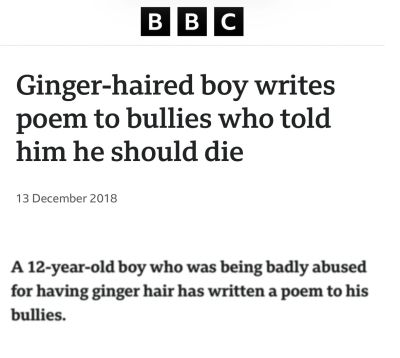
BBC News reported on the case of Alfie Coleiro, a 12-year-old boy from England who endured severe bullying because of his ginger hair. According to reports, classmates repeatedly taunted him and told him that he should die, causing significant emotional distress. In response, Alfie wrote a poem describing the abuse he faced, which was later shared publicly and attracted widespread attention. His story resonated with people across the United Kingdom and led to appearances on national television, including ITV's This Morning, where he spoke out against bullying and encouraged greater awareness of the impact that appearance-based harassment can have on young people. ( Read More )
Case: Anti-Redhead Ad Campaign Withdraw (Australia, 2018)
An Australian beer company withdrew an advertising campaign after complaints that it promoted discriminatory attitudes toward people with red hair. The campaign used language implying the discouragement or elimination of red-haired traits, which critics argued reinforced harmful stereotypes. Advertising regulators agreed the campaign was inappropriate, leading to its removal following public criticism. ( Read More )

Case: Ginger Slur Used by Senior Politician (Scotland, 2010)
Deputy Labour leader Harriet Harman publicly apologized after referring to Chief Treasury Secretary Danny Alexander as a “ginger rodent” during a speech at the Scottish Labour conference in Oban. A Labour spokesperson later confirmed that Harman acknowledged the remark was wrong and personally apologized to Alexander by telephone. The incident sparked discussion about the acceptability of appearance-based language in political discourse. Alexander responded publicly by stating that he was “proud to be ginger.” The episode was cited in wider debates about discriminatory language and standards of conduct in public office. ( Read More )

Case: The "Ginger Attacks" (California, USA, 2009)
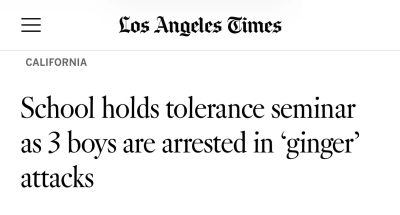
The Los Angeles Times reported on a series of assaults at a California middle school that became known as the "ginger attacks." Inspired by a popular television episode that mocked red-haired people, several students allegedly targeted classmates with red hair, leading to physical attacks and harassment. Three boys were arrested in connection with the incidents, while school officials responded by holding tolerance seminars to address bullying and discrimination. ( Read More )
Case: Calgary Red-Haired Student Assault (Canada, 2008)
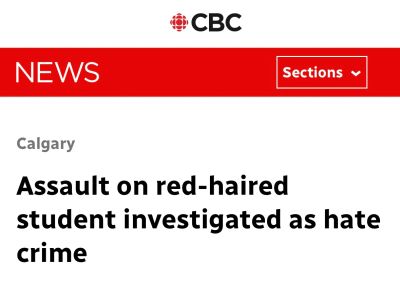
CBC News reported on the case of a red-haired student in Calgary, Alberta, who was assaulted by a group of youths in an attack that police investigated as a possible hate crime. According to reports, the victim was targeted specifically because of his red hair, with witnesses stating that anti-ginger slurs were used during the assault. The incident drew widespread media attention across Canada and sparked debate about whether discrimination and violence directed at red-haired individuals should be taken more seriously by schools, communities, and law enforcement. ( Read More )
Case: Brian Birchall (Queensland, Australia, 2018)
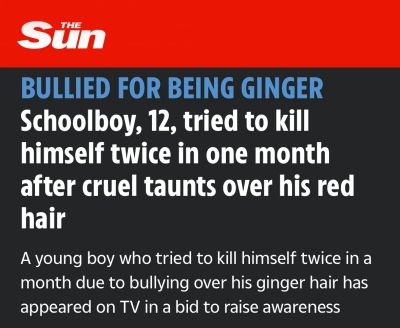
The Sun reported on the case of Brian Birchall, a 12-year-old boy from Queensland, Australia, who endured persistent bullying because of his ginger hair. According to reports, classmates repeatedly mocked and harassed him over his appearance, causing severe emotional distress. Brian's family stated that the bullying became so overwhelming that he attempted to take his own life twice within a single month. After surviving, Brian and his mother spoke publicly about his experiences, appearing on television to raise awareness of the serious consequences of bullying and to encourage greater support for children facing appearance-based harassment. ( Read More )
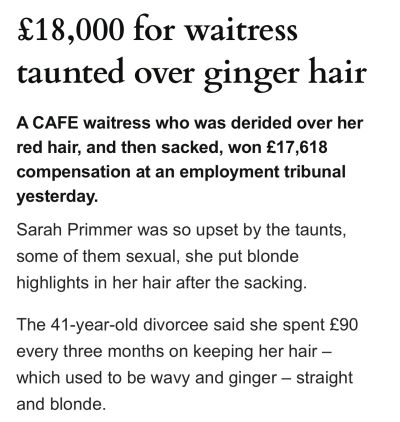
Sarah Primmer Employment Tribunal (United Kingdom, 2007)
Sarah Primmer, a 41-year-old waitress from Plymouth, was awarded £17,618 in compensation by an employment tribunal after enduring repeated harassment related to her red hair while working at a café.
According to tribunal findings, Primmer was subjected to a series of derogatory and sexually charged comments about her hair color by colleagues and management. The harassment became so distressing that she later began dyeing her naturally ginger hair blonde. While on medical leave due to the stress caused by the treatment, she was dismissed from her job. The tribunal ruled in her favor and awarded compensation for unfair dismissal. ( Read More )
Case: Alex Kosuth-Phillips (United Kingdom, 2013)
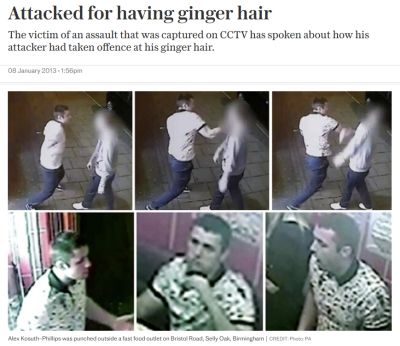
In January 2013, the BBC reported on the case of Alex Kosuth-Phillips, a 23-year-old man who was violently assaulted outside a fast-food restaurant in Birmingham after celebrating his birthday. According to Kosuth-Phillips, the attacker took offense to his ginger hair before launching an unprovoked attack.
The assault left him with a broken jaw in two places, requiring surgeons to insert two metal plates into his face. He spent three months drinking through a straw while recovering from his injuries. Police later released CCTV footage of the incident in an effort to identify the suspect, who remained at large at the time of the report. ( Read More )